Robert Aickman, perhaps the greatest English writer of supernatural fiction, more than once expressed the view that the ghost story as a form was analogous to poetry. What he was getting at is that it is delicate, shaded, requires a deal of sensitivity from the writer, and has many competing elements that have to be in balance in order for the thing to work at all.
If this is true, then Susan Hill‘s first ghost story, The Woman in Black, is by now akin to Wordsworth’s “Daffodils” – having entered into the popular imagination in a way no other piece of its genre has since A Christmas Carol. Its theatrical version is still running in London’s West End after 23 years, and it’s about to be made into a 3D movie.
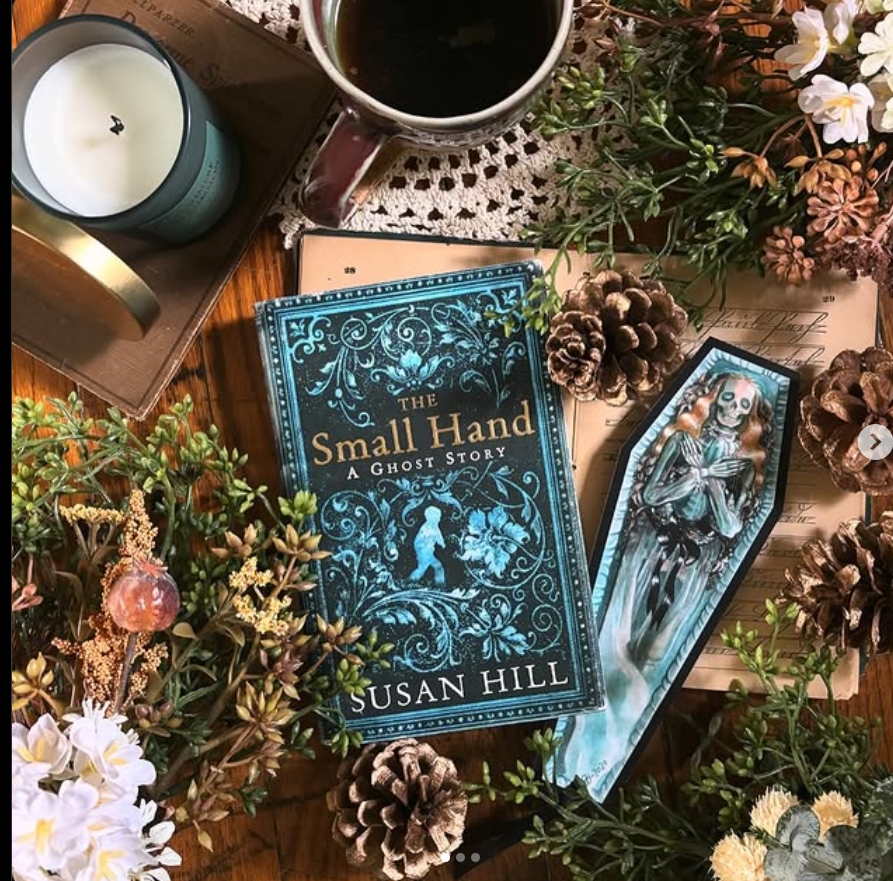
The Small Hand, Hill’s fourth supernatural tale, eschews period and adopts a contemporary setting – albeit a musty one. Its protagonist Adam Snow is a dealer in rare and antiquarian books, as were many of MR James’s leading men. But this is no mere homage: Hill is too fine a writer for that.
The ghost story is an intensely moral form, and one of its most interesting aspects is the alchemy it allows, enabling a writer to render the horrors of life with a strange, icy beauty. Such horrors are easier looked at askance, particularly when, as Susan Hill rightly reminds us, the monstrous is closer to home than we dare admit.
Buy The Small Hand and support your local bookshop
 CardiffRead
Leave a comment